

Top Picks, Buying Tips, and Towing Basics
Shopping for the best used vehicles for towing boats isn’t just about finding a powerful engine. The right match balances tow rating, payload, wheelbase, gearing, cooling, and braking so you can launch, haul, and park with confidence. Whether you are pulling a light aluminum fishing skiff or a cabin cruiser, this guide explains what matters most in a tow-ready used truck or SUV, with real world examples and practical checks you can use on your next test drive. You will learn how tongue weight, hitch classes, and axle ratios affect control and stability. You will also see popular used models that consistently deliver strong towing performance, from half ton pickups to full size and body on frame SUVs. When you are ready to compare options, browse our used inventory, evaluate your trade, and plan a service check to confirm the right setup for safe weekend towing and summer trips.
Below you will find detailed towing fundamentals, recommended used trucks and SUVs by boat size, setup checklists, and maintenance tips that help protect your transmission and brakes. You can also explore related research pages, review towing focused articles on our blog, and schedule an inspection to verify hitches, wiring, and brake controllers before your first ramp launch.
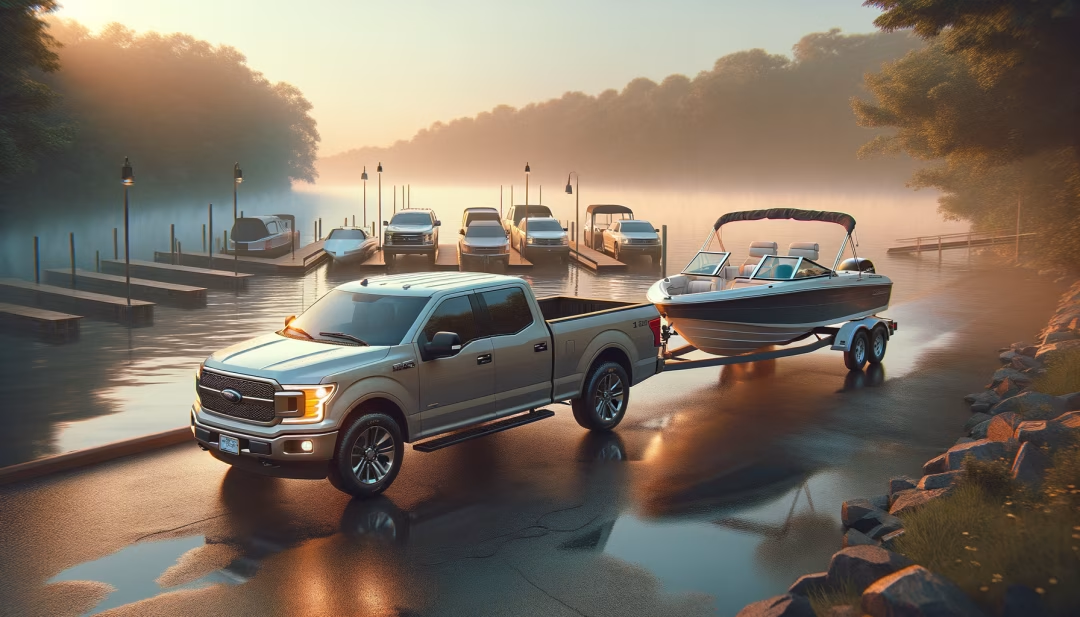
What to Look For in a Used Tow Vehicle for Boats
Boat towing places unique demands on a vehicle. Ramps can be slick, trailers add aerodynamic drag, and stop and go traffic near marinas challenges brakes and cooling systems. Focus on the whole towing package rather than horsepower alone.
- Tow rating and GCWR: Verify the exact tow rating for the trim, engine, axle ratio, and tow package. Compare your boat plus trailer, fuel, gear, and passengers to the vehicle GCWR.
- Payload and tongue weight: Aim for tongue weight near 10 to 15 percent of total trailer weight and confirm it stays within payload once people and cargo are on board.
- Axle ratio and transmission: Towing friendly ratios and transmissions with tow haul modes reduce shifting and heat on ramps and hills.
- Cooling and braking: Look for factory tow packages with upgraded cooling, larger alternators, a receiver hitch, and an integrated brake controller or 7 pin wiring.
- Wheelbase and stability: Longer wheelbase vehicles track straighter with heavier boats, especially at highway speeds and in crosswinds.
- 4x4 for ramps: Four wheel drive or a locking differential helps on algae covered ramps and gravel approaches. Use low range to reduce strain when pulling out.
Approximate loaded boat and trailer weights vary widely. Aluminum fishing boats often range from 1,500 to 2,500 pounds, 18 to 21 foot fiberglass bass or bowrider packages often land near 3,000 to 4,500 pounds, and 22 to 25 foot deck boats or cuddy cabins can reach 5,000 to 7,500 pounds or more. Always confirm with your boat manufacturer and trailer placards, then add fuel, coolers, safety gear, and passengers.
Best Used Trucks and SUVs for Towing Boats
Ratings and availability can vary by year, engine, and package. Always verify the specific vehicle tow label, owner manual, and hitch capacity.
Half Ton Pickup Standouts
- Ford F 150 3.5L EcoBoost or 5.0L V8: Strong mid range torque, widely available Max Trailer Tow Package, and long wheelbase options. Properly equipped examples often exceed 10,000 pounds, ideal for a wide range of boats.
- Chevrolet Silverado 1500 5.3L or 6.2L: Robust frames and available trailering packages. With the right gearing, many trims handle 9,000 to over 11,000 pounds comfortably.
- Ram 1500 5.7L HEMI: Smooth ride with coil spring rear suspension, good tow ratings when equipped with the proper axle ratio and factory tow package.
Full Size and Body on Frame SUVs
- Ford Expedition: Twin turbo V6 torque, long wheelbase MAX models for stability and cargo, and frequent integrated brake controllers on tow package vehicles.
- Chevrolet Tahoe and Suburban and GMC Yukon: Proven V8 power with available heavy duty cooling and well supported aftermarket hitches and brake controllers.
- Toyota Sequoia: Strong reliability record with body on frame construction and tow ratings often between 7,000 and 9,000 pounds depending on year and setup.
- Nissan Armada: 5.6L V8 torque and standard receiver on many trims, a solid match for mid size to larger runabouts and deck boats.
Midsize Trucks and SUVs for Lighter to Midweight Boats
- Toyota Tacoma V6 Tow Package: Rated around 6,400 pounds on many configurations. Great for aluminum fishing boats and smaller fiberglass models, especially with 4x4 for ramp traction.
- Chevrolet Colorado and GMC Canyon V6 or Turbo Diesel: The diesel option shines for steady low speed torque and engine braking, useful on slippery marina approaches.
- Jeep Grand Cherokee V8 or available diesel in older model years: Confident tow manners and available factory tow equipment. V8 models commonly tow 6,200 to 7,200 pounds.
- Toyota 4Runner: Body on frame durability, 5,000 pound rating on most trims, and excellent ramp traction with part time 4x4.
Match Your Boat to the Right Class of Vehicle
- Up to about 3,500 pounds loaded: Many midsize SUVs with factory tow packages or midsize trucks. Verify cooling and hitch class II or III.
- 3,500 to 6,000 pounds loaded: Strong candidates include Tacoma V6 Tow Package, Colorado V6 or diesel, Grand Cherokee V8, and Toyota 4Runner for ramp traction and control.
- 6,000 to 9,000 pounds loaded: Half ton pickups with the correct axle ratio and factory tow package, or body on frame SUVs like Expedition, Tahoe, Yukon, Sequoia, and Armada.
- 9,000 pounds and higher: Consider max tow half tons configured for peak ratings or step up to heavy duty three quarter ton trucks when boat and gear are near five digit weights.
Essential Tow Setup and Ramp Readiness Checklist
- Confirm hitch class rating and condition. A rusted or unknown aftermarket hitch should be inspected before towing.
- Use the correct ball size and properly torqued ball mount with the right drop or rise to keep the trailer level.
- Verify 7 pin wiring, lights, and trailer brakes. Install or enable an electric brake controller where required by law and weight.
- Check tire pressures on vehicle and trailer. Trailer tires age out faster; inspect dates, sidewalls, and spares.
- Balance your load to achieve appropriate tongue weight. Secure coolers, anchors, and fuel tanks to prevent shifting.
If you routinely launch in saltwater, consider stainless or coated hardware, frequent underbody rinses, and a transmission and differential service interval shorter than normal. Four wheel drive low range can help start smoothly without wheelspin. Keep a wheel chock and transom straps handy at the ramp for extra control.
Used Tow Vehicle Inspection Points
Towing stresses cooling systems, driveline seals, suspensions, and brakes. When evaluating used options, look beyond cosmetic details and focus on mechanical readiness.
- Service records showing transmission fluid exchanges, differential and transfer case services, and coolant changes at or before manufacturer intervals.
- Signs of heavy towing like worn rear shocks, uneven rear tire wear, or heat stressed transmission fluid. Upgraded cooling components are a plus.
- Frame, hitch mounting points, and trailer wiring condition. Look for corrosion from ramp launches and ensure clean grounds for bright trailer lights.
Use our used car inspection resources to stay organized and ask smart questions. See used-car-inspection-checklist, what-to-look-for-when-buying-a-used-car, and how-to-avoid-buying-a-bad-used-car. For added peace of mind, schedule-service to verify brakes, cooling, and electrical before your first tow.
Gas vs Diesel for Boat Towing
Modern gas V8 and turbo V6 engines deliver excellent performance for most recreational boats. Diesel options in certain trucks or midsize platforms offer strong low speed torque and natural engine braking, which helps on ramps and long grades. Diesel maintenance, emissions equipment, and fuel costs vary, so weigh your annual towing miles and ramp conditions. For weekend towing under 7,000 pounds, many buyers prefer the lower cost and wider availability of gas power. For frequent heavy towing, diesel can provide relaxed throttle response and fewer downshifts.
Budget Friendly Paths to a Boat Ready Setup
You can find capable tow vehicles at a range of price points. Browse best-used-trucks-under-20000 and best-used-suvs-under-20000 for practical options. If you want to stretch fuel savings on lighter boats, visit best-used-cars-with-good-gas-mileage and used-cars-with-high-mpg to compare efficiency. To see broader towing guidance, read best-used-vehicles-for-towing and best-used-vehicles-for-hauling.
Financing, Trade Value, and Next Steps
Plan your budget with payment-options and apply online through applications to streamline your visit. Check value-my-trade to estimate equity from your current vehicle. When you are close to a decision, use schedule-a-test-drive to experience ramp like starts, low speed maneuvering, and highway tracking with a loaded trailer simulation if available.
Helpful Research and Inventory Links
Explore our latest arrivals in used-inventory, review recent deliveries in sold-inventory, and learn more about our team in meet-our-staff. Read towing tips and ownership articles on blog, and connect with our team through contact-us or visit about-us for our story.
Frequently Asked Questions About Used Vehicles for Towing Boats
Add the dry boat weight, engine, fuel, batteries, gear, and trailer weight to estimate total. Target a vehicle tow rating at least 20 percent higher than your loaded trailer for margin. Confirm tongue weight and payload fit within the vehicle sticker values.
Four wheel drive is not mandatory but it improves traction on slick, algae covered, or steep ramps. Low range reduces strain and helps you pull out smoothly. If you launch on gravel or saltwater ramps often, 4x4 is a strong advantage.
Most small to mid size boat trailers use a Class III receiver. Heavier setups may need Class IV or V. Match the hitch, ball mount, and ball to your trailer rating, and keep the trailer level with the correct rise or drop.
Use tow haul mode, avoid excessive gear hunting, and service transmission fluid at or before the severe schedule. Confirm your tow package includes an auxiliary cooler. Downshift early on grades and let the drivetrain cool with gentle driving after a long pull.
Many single axle boat trailers do not require weight distribution, but heavier or longer dual axle trailers can benefit from it to level the vehicle, restore steering feel, and improve braking. Always follow the trailer and hitch manufacturer guidance.
Legal and Safety Considerations
Trailer brake laws vary by state and by weight thresholds. Check your state rules for brake requirements and speed limits. Keep a copy of your registration and insurance in the tow vehicle. Test lights and brakes before each trip, cross your safety chains under the coupler, and use a breakaway cable for electric brake systems. If you need help aligning your setup with local rules and best practices, our team can review your plan during a pre tow inspection.
Where to Continue Your Research
Deep dive into towing and ownership topics on research-page-template, how-to-buy-a-used-car, how-to-finance-a-used-car, and used-car-warranty-guide. For snow region towing or shoulder season launches, see best-used-vehicles-for-winter-driving and best-used-cars-for-snow. When you are ready to refine your shortlist, compare brands with most-reliable-used-trucks and most-reliable-used-suvs, and check value retention with used-cars-with-best-resale-value.
Office Hours
Monday
Tuesday
Wednesday
Thursday
Friday
Saturday
9:00 am - 5:00 pm
9:00 am - 5:00 pm
9:00 am - 5:00 pm
9:00 am - 5:00 pm
9:00 am - 5:00 pm
Closed
