

Cars by Brand
Shopping for the best used electric cars by brand starts with understanding how each make balances range, charging speed, reliability, and long term value. This guide spotlights standout used EVs from Tesla, Chevrolet, Nissan, Hyundai, Kia, Ford, Volkswagen, and luxury brands, with model year notes and trim insights to help you focus faster. Learn which vehicles deliver the most real world range, which charge the quickest on road trips, and which brands offer strong warranty support. You will also find links to research tools, buyer checklists, financing resources, and our live used inventory so you can move from research to a confident test drive. Whether you want a commuter friendly hatchback, a family ready crossover, or a premium highway cruiser, this brand by brand breakdown will point you to smart, budget friendly picks.
- Browse inventory: used-inventory
- Explore EV research: best-used-electric-vehicles
- Buyer tips: how-to-buy-a-used-car
Used EV shoppers often compare battery health, charging access, and total cost of ownership. Inside this guide you will find brand by brand highlights, key model year updates, and service and warranty insights. When you are ready, use our tools to estimate payments, apply for financing, value your trade, and schedule a test drive. Helpful links below connect you to inventory, research, and support.
- Payment tools: payment-options and applications
- Trade value: value-my-trade
- Test drive: schedule-a-test-drive
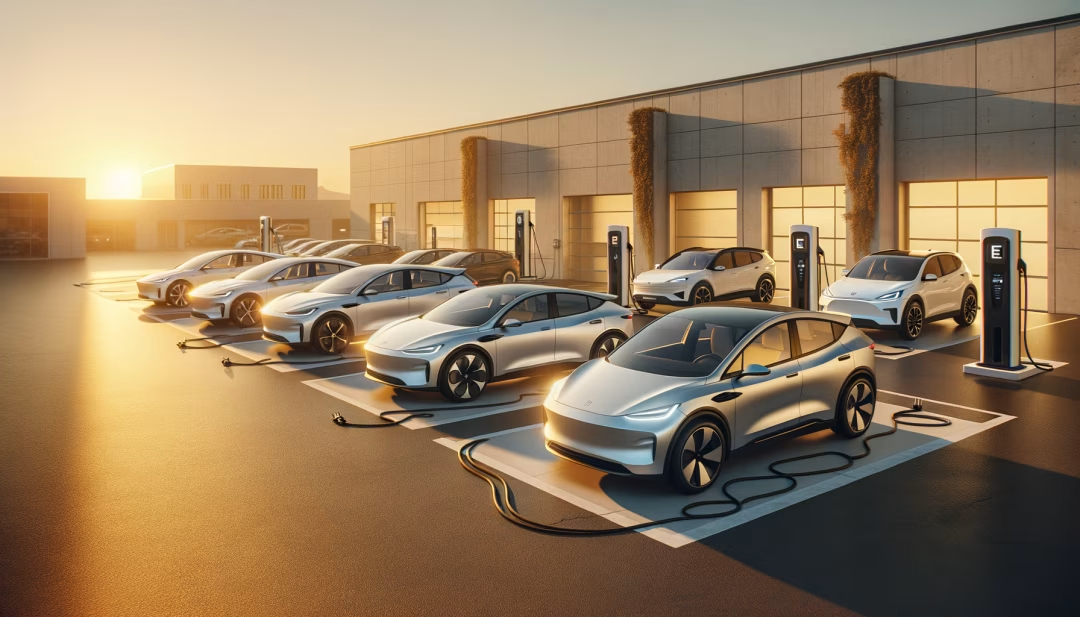
How we picked the best used electric cars by brand
To help you choose with confidence, we compared key factors that matter most in real world ownership. We combined publicly available range data with owner reported reliability, battery chemistry, common maintenance needs, charge speed on common networks, warranty coverage, and resale value trends.
- Real world range and efficiency, not only lab ratings
- DC fast charging speed and network compatibility for trips
- Battery longevity, chemistry, and thermal management design
- Reliability and common repair costs based on owner feedback
- Warranty support and brand service resources
Best used electric cars by brand
Tesla
Known for top tier range and access to the Supercharger network, Tesla models remain strong used buys when you prioritize long distance travel and over the air updates. Look for clean history, recent software, and healthy tire and brake wear.
- Model 3 Long Range or RWD: Balanced price, range, and efficiency. Later heat pump years improve cold weather use.
- Model Y Long Range: Family friendly cabin and cargo, strong resale value.
- What to check: Battery degradation reports, charging speed behavior, and tire condition.
Chevrolet
Chevrolet Bolt EV and Bolt EUV deliver excellent value, strong efficiency, and practical range for daily driving. Many units received battery replacements under factory programs, which can be a win for used buyers.
- Bolt EV and Bolt EUV: Affordable, quick to charge at home, and roomy for size.
- What to check: Battery recall status, DC fast charge behavior, and tire wear.
Nissan
Nissan Leaf pioneered mainstream EVs and remains one of the most budget friendly used EVs. Earlier models use air cooled batteries, so battery health checks matter more in hot climates. Later Leafs with larger batteries improve range and durability.
- Leaf 40 kWh: Great commuter choice with low running costs.
- Leaf Plus 62 kWh: More range and stronger highway comfort.
Hyundai
Hyundai Kona Electric and Ioniq Electric offer high efficiency, strong feature content, and generous warranty support. Kona Electric stands out for range and value, while Ioniq Electric is a super efficient city and suburban choice.
- Kona Electric: Compact SUV form factor with excellent range per dollar.
- Ioniq Electric: Smooth ride, great efficiency, and simple ownership.
Kia
Kia Niro EV balances space, features, and efficiency. It is a family friendly hatchback with comfortable ride quality and an intuitive cabin. Many trims include advanced safety tech and driver aids.
- Niro EV: Versatile cargo space, good range, and strong value retention.
Ford
The Mustang Mach E brings style, performance, and competitive range. Multiple trims offer different battery sizes and power outputs. BlueCruise and large infotainment add tech appeal on the highway.
- Mach E Select or Premium: Solid all around choice with useful features.
- What to check: Software updates, charging strategy, and tire alignment.
Volkswagen
Volkswagen ID4 is a roomy crossover with a comfortable ride, practical cargo area, and an easy learning curve. It is a good fit for families who want EV efficiency with familiar SUV proportions.
- ID4 Pro: Balanced range and value, especially in later software builds.
BMW
BMW i3 is a unique, lightweight city car with upscale materials and nimble handling. Later models offer larger batteries. The i3 can be a great second car for urban commuting thanks to efficiency and compact size.
- i3 BEV: Lower maintenance and simple ownership for city use.
Audi
Audi e tron delivers luxury comfort with a refined cabin and standard all wheel drive. While efficiency trails some rivals, the ride quality and quiet interior are excellent for longer trips and premium daily driving.
- e tron Premium Plus: Strong value on the used market with high comfort.
Volvo
Volvo XC40 Recharge blends Scandinavian design, safety technology, and brisk performance. It suits buyers who want a compact luxury SUV with intuitive tech and robust driver assistance features.
- XC40 Recharge: Premium cabin, confident traction, and quick acceleration.
Best used EVs by budget and segment
If price is a key driver, you can still find a strong match. For affordability, the Nissan Leaf and Chevrolet Bolt often lead, especially for local driving. For family crossovers, consider Kia Niro EV, Hyundai Kona Electric, and Volkswagen ID4. For premium comfort and long highway trips, look at Tesla Model 3 or Model Y, Audi e tron, and Volvo XC40 Recharge.
- Explore value picks: best-used-electric-cars-under-25000
- Compare all EVs: best-used-electric-vehicles
Battery health, charging, and maintenance tips
Battery condition is central to used EV value. Ask for a recent battery report when possible, review charging history, and check that any manufacturer battery programs or recalls were completed. Vehicles with liquid cooled battery packs often show more consistent longevity in mixed climates. Regular software updates can also improve charging behavior and efficiency.
At home, Level 2 charging typically restores a full battery overnight. On trips, DC fast charging is the quickest option, but speeds vary by model and state of charge. Cold weather can temporarily reduce range, so plan a buffer in winter. Tires, cabin air filters, and brake fluid remain the main maintenance items, and regenerative braking often extends brake pad life compared with gas vehicles.
- Pre purchase prep: used-car-inspection-checklist and what-to-look-for-when-buying-a-used-car
- History help: how-to-check-used-car-history and used-car-vin-check-guide
- Service support: schedule-service
Warranty and coverage considerations
Most EVs include separate battery and drive unit warranties that extend longer than the basic bumper to bumper warranty. Verify remaining coverage by model year and mileage. For peace of mind, some buyers add extended protection that includes high voltage components and electronics. Make sure coverage terms fit how long you plan to keep the vehicle.
- Learn about coverage: used-car-warranty-guide, extended-warranty-for-used-cars, and used-vehicles-with-best-warranty-coverage
Financing, trade in, and ownership costs
Used EVs can offer lower fuel and maintenance costs, which may help your budget. You can estimate payments, compare loan options, and see how your trade in value could lower your out of pocket cost. Review insurance quotes and factor in home charging installation if needed. Ownership costs vary by brand, tire size, and driving habits, but many EV owners spend less on service compared with gas models.
- Financing resources: how-to-finance-a-used-car, used-car-loan-interest-rates, applications, and payment-options
- Trade in estimator: value-my-trade
- Cost guides: used-cars-with-lowest-cost-of-ownership and used-cars-with-best-resale-value
Helpful research links
Use these quick links to continue your research and plan next steps.
- Inventory: used-inventory and sold-inventory
- EV roundups: best-used-electric-vehicles and best-used-cars-with-high-mpg
- Budget picks: best-used-cars-under-20000 and best-used-electric-cars-under-25000
- Buyer education: how-to-buy-a-used-car, used-car-buying-checklist, and used-car-inspection-checklist
- About and contact: about-us, locations, and contact-us
Frequently Asked Questions
Legal and policy
For information about policies and data practices, visit privacy-policy, terms, and visitor-agreement. For news and market insights, visit blog. To learn more about our team, see meet-our-staff and bios.
Office Hours
Monday
Tuesday
Wednesday
Thursday
Friday
Saturday
9:00 am - 5:00 pm
9:00 am - 5:00 pm
9:00 am - 5:00 pm
9:00 am - 5:00 pm
9:00 am - 5:00 pm
Closed
