

A Clear Guide For Smart Buyers
Inflation touches nearly every part of car ownership, from sticker prices to loan payments and long term maintenance. When general prices rise, the cost of acquiring, reconditioning, transporting, and financing used vehicles often rises too. That pressure can lift asking prices, reshape trade in values, and change the mix of vehicles available on the lot. Understanding how inflation interacts with interest rates, supply and demand, and depreciation can help you decide what to buy, when to buy, and how to budget with confidence.
This page explains the factors that drive used car prices in an inflationary market, how to estimate a fair price, and the strategies you can use to protect your budget. Explore real world examples, segment by segment trends, and financing basics. You can also review current market insights on used vehicle price trends and learn how to value your trade so you enter negotiations prepared.
Prices move with the broader economy, but shoppers still have options. Compare models with historically strong resale value, weigh interest rate impacts on monthly payments, and factor fuel and insurance into your total cost. Use our research, inventory browsing, financing education, and trade in valuation tools to build a plan that fits today’s market conditions.
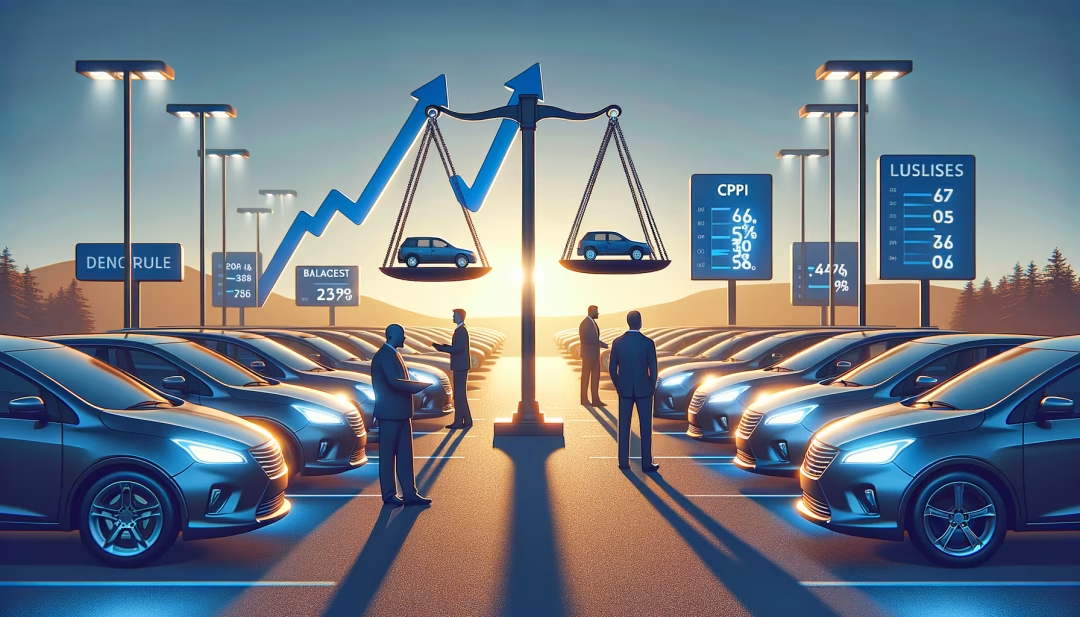
What inflation is and why it matters to used car buyers
Inflation is the general rise in prices across the economy. It does not increase the value you get from a product, but it does increase the money required to buy the same product. For used vehicles, inflation can raise wholesale auction prices, transportation costs, parts and labor for reconditioning, and the cost of borrowing. When those inputs rise, retail prices often follow.
The core drivers behind used car price movement
Used car pricing reflects a chain of influences. On the supply side, fewer trade ins, lease returns, or fleet de-fleets can tighten availability and lift prices. On the demand side, buyers seeking value often shift from new to used when new car prices or interest rates climb, which can also elevate used prices. Financing costs are crucial too. Even if a vehicle’s sticker price holds steady, a higher interest rate can raise the monthly payment and the total cost of ownership.
- Inflation can lift wholesale and retail used vehicle prices by raising operating and acquisition costs for dealers.
- Higher interest rates increase monthly payments, even when asking prices do not change.
- Supply shortages or delays can amplify price pressure in specific segments such as trucks or 3 row SUVs.
How inflation interacts with interest rates and monthly payments
Central banks often raise benchmark rates to bring inflation down. That can push auto loan rates higher. For used car buyers, a higher annual percentage rate increases monthly costs and the total interest paid over the life of a loan. Shoppers can respond by choosing shorter terms, increasing down payment, or selecting lower price vehicles that still fit their needs. Learn more on how rates move payments at how-interest-rates-affect-used-car-loans and compare typical ranges at used-car-loan-interest-rates.
Segments most and least sensitive to inflation
Not all vehicles move in lockstep. Segments with strong work utility or family capacity often hold demand, while discretionary performance models can be more cyclical. Fuel price swings also matter. When gasoline costs rise, efficient hybrids, compact cars, and small crossovers can appreciate relative to larger, less efficient options.
- Efficiency first: See choices at used-cars-with-high-mpg and best-used-hybrid-cars.
- Family and cargo: Compare options at best-used-suvs and best-used-3-row-suvs.
- Work focused: Explore picks at best-used-trucks and best-used-trucks-for-work.
Depreciation during and after high inflation periods
Depreciation is the decline in value over time. In tight supply periods, depreciation can slow and sometimes reverse for sought after models. As supply normalizes, depreciation patterns often revert. Buyers should plan for future value, not just today’s price. Our guide at used-car-depreciation-guide shows typical curves by age and mileage, and used-cars-with-best-resale-value highlights models that historically hold value better than peers.
How to estimate a fair price in an inflationary market
Start with current local comparables, then adjust for trim, mileage, condition, and equipment. Confirm the vehicle history and maintenance records to refine your risk assumptions. Factor the financing rate and total cost of ownership including insurance, registration, and likely maintenance. You can cross check broader movements at used-car-market-trends and used-car-price-trends, and learn how dealers price vehicles at how-dealers-price-used-cars.
- Review similar listings near you for real time pricing anchors.
- Use VIN history and inspection to validate condition. See how-to-check-used-car-history and used-car-inspection-checklist.
- Estimate total ownership cost. Reference used-cars-with-lowest-cost-of-ownership.
Financing strategies that help offset inflation
A smart finance structure can reduce inflation pressure on your budget. Increasing your down payment can lower the loan amount and interest cost. Shorter terms typically reduce total interest paid, while credit improvement can qualify you for better rates. Learn step by step at how-to-finance-a-used-car, review payment structures at payment-options, and explore approval tips at how-to-get-approved-for-a-used-car-loan. If you already have a loan, read how-to-refinance-a-used-car-loan.
Trade in value and inflation
Inflation can lift trade in offers when market prices rise, but the net impact depends on the spread between your trade and the vehicle you are buying. If both moved up by a similar percentage, your change in equity might be modest. Always obtain a current valuation and compare retail and trade figures. Start with value-my-trade to estimate today’s range and check recently sold comps at sold-inventory.
Timing your purchase
Seasonality still exists. Tax refund season can boost demand, while late year periods can produce motivated pricing as inventories shift. However, inflation and supply trends can override typical patterns. Monitor live inventory at used-inventory, review broader signals at used-car-inventory-trends, and learn when the best windows often appear at when-is-the-best-time-to-buy-a-used-car.
Negotiation and transparency
In a market influenced by inflation, facts are your best leverage. Arrive with recent comparable listings, verified vehicle history, and a pre qualified rate if possible. Be clear on your must have features and your walk away price. Our guide at how-to-negotiate-a-used-car-price breaks down a step by step approach that maintains a collaborative tone and keeps the focus on total value and monthly fit.
- Bring a current pre approval or soft pull rate quote for clarity.
- Prioritize safety and reliability. See safest-used-cars and most-reliable-used-cars.
- Use a test drive checklist. Reference schedule-a-test-drive for planning.
Fuel, maintenance, and insurance during inflation
Total ownership cost can shift even if your monthly payment is stable. Fuel price increases raise the operating cost of lower mpg vehicles. Parts and labor can rise with inflation too, which is why models known for low maintenance costs can shine in this environment. Review picks at best-used-cars-with-low-maintenance-costs, and consider extended protection only after you understand coverage at used-car-warranty-guide and extended-warranty-for-used-cars. If you already own a vehicle that needs attention, plan service strategically at schedule-service.
Balancing needs and budget in a rising price environment
When prices rise, focus on the utility you actually need. The right sized vehicle with the right features can save you thousands over time. Consider certified pre owned versus traditional used at certified-pre-owned-vs-used. If budget is tight, explore value lists like best-used-cars-under-15000, best-used-suvs-under-15000, and most-reliable-used-cars-under-10000. You can also review commuter favorites at best-used-commuter-cars and winter ready options at best-used-vehicles-for-winter-driving.
Research and tools
Good preparation beats price spikes. Build a short list of models that fit your use case, compare long term ownership costs, and monitor inventory and pricing for a few weeks if your timeline allows. When you are ready to evaluate a specific vehicle, use our buyer education at how-to-buy-a-used-car, used-car-buying-checklist, and how-to-avoid-buying-a-bad-used-car. If you are comparing budget scenarios, see how-much-down-payment-for-used-car and should-you-buy-or-finance-a-used-car.
Helpful resources
Use these quick links to explore inventory, compare models, or learn more about policies and support.
Frequently Asked Questions
Office Hours
Monday
Tuesday
Wednesday
Thursday
Friday
Saturday
9:00 am - 5:00 pm
9:00 am - 5:00 pm
9:00 am - 5:00 pm
9:00 am - 5:00 pm
9:00 am - 5:00 pm
Closed
